


On paper, the collapse of the USSR should have been Türkiye’s problem. It had spent the Cold War as NATO’s most exposed eastern flank, staring across the Black Sea and the Caucasus at a superpower that could, in theory, roll armor through Georgia and Armenia in an afternoon. Türkiye’s entire strategic posture, its army size, its alliance commitments, its relationship with Washington had been built around containing the USSR.
Then, on December 26, 1991, the Soviet Union simply stopped existing. And Türkiye discovered that the thing it had spent decades defending against had turned, overnight, into the biggest opportunity of its modern history.
From frontline state to regional hub
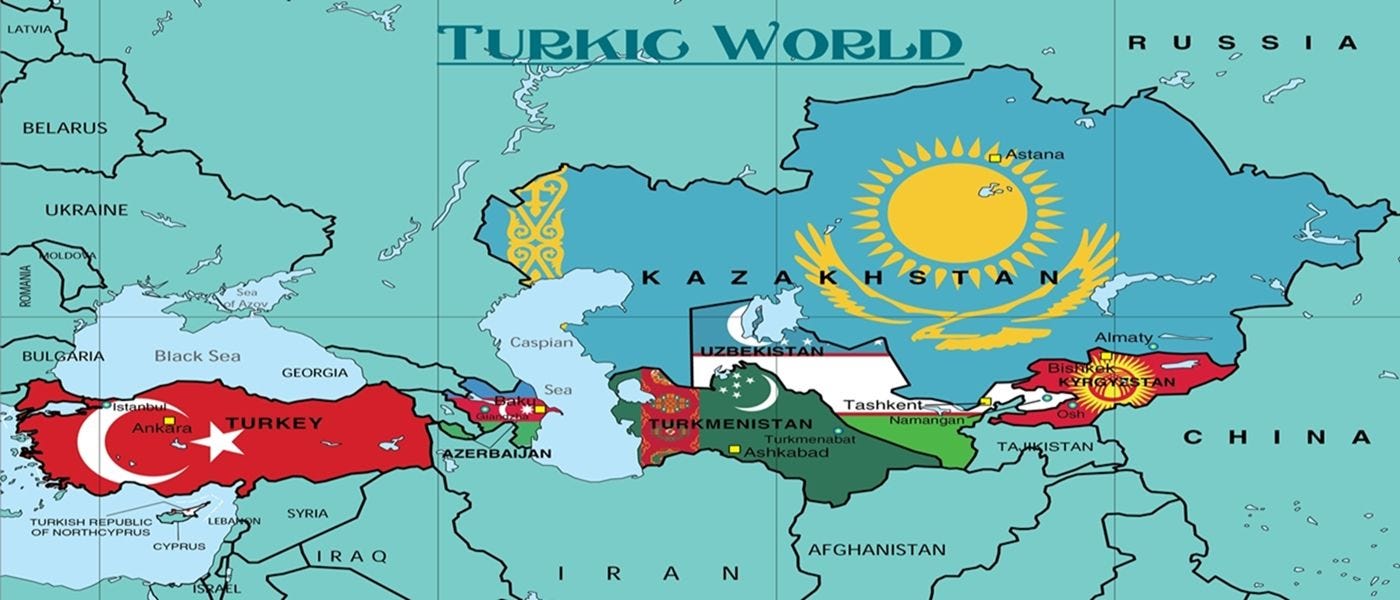
The core shift was geographic and psychological at once. Overnight, the closed, militarized Soviet border that had boxed Türkiye into a corner of NATO’s map became a doorway. On the other side stood Azerbaijan, Kazakhstan, Uzbekistan, Turkmenistan, and Kyrgyzstan states whose populations are majority Turkic-speaking, and Georgia and Armenia besides. Ankara, a middle power that had spent seventy years fighting for relevance on Europe’s southeastern edge, suddenly had a plausible claim to being the natural leader of a much larger cultural and economic space stretching to the borders of China.
Türkiye moved fast. It was among the first countries to recognize the new Central Asian and Caucasus states, and Turkish diplomats, TV crews, and businesspeople showed up in Almaty, Ashgabat, and Baku before almost anyone else did.
Kinship as strategy
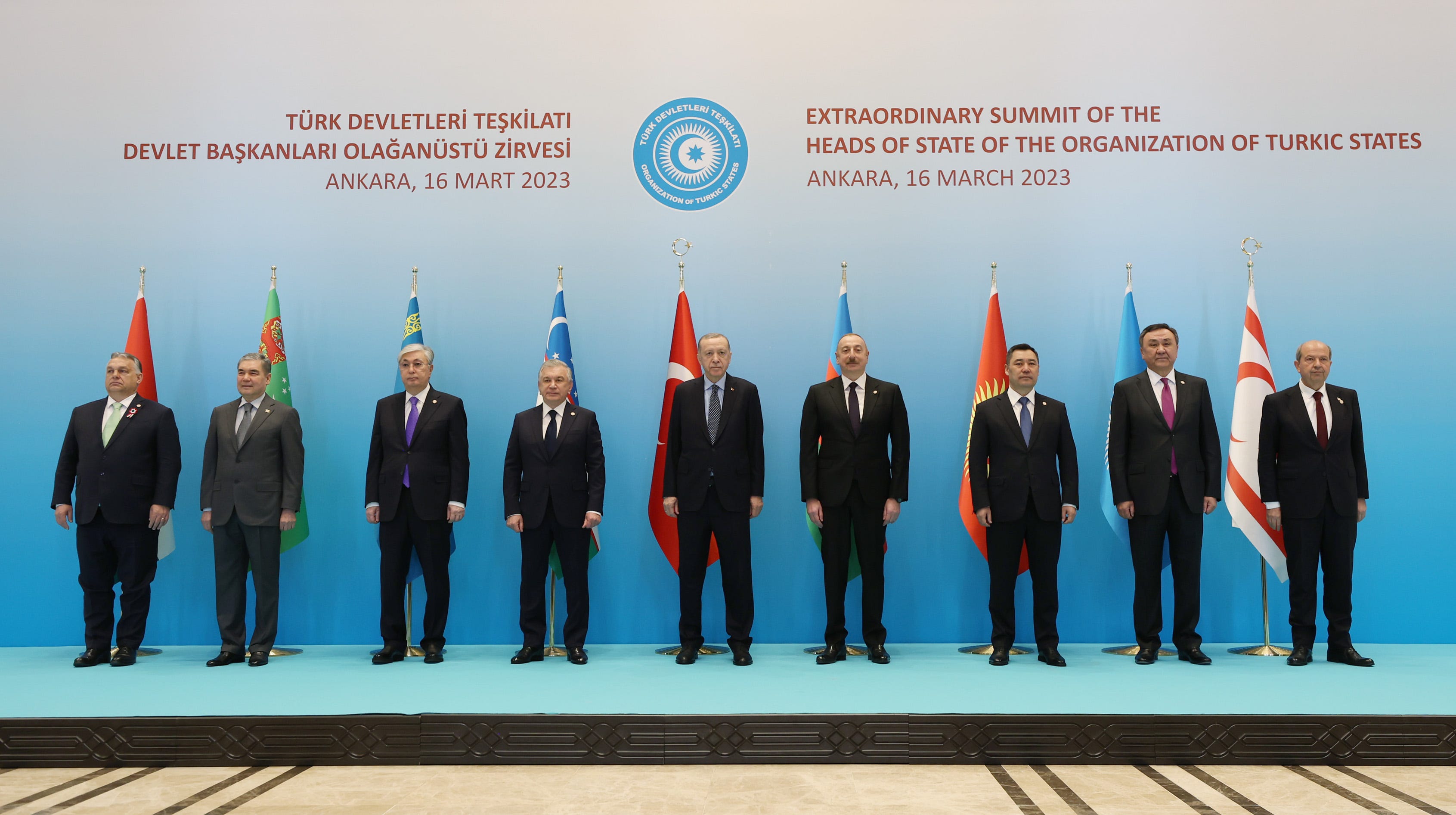
The instrument Türkiye reached for first was cultural. Turkish and the Central Asian Turkic languages; Kazakh, Uzbek, Turkmen, Kyrgyz, Azerbaijani are close enough that Ankara could plausibly present itself as family rather than a foreign power. It co-founded TURKSOY, an international Turkic culture organization, and set up TIKA, its development agency, to fund infrastructure, restore mosques and monuments, and build goodwill across the region.
That early 1990s push actually stumbled Central Asian leaders, freshly independent and wary of any “big brother,” pushed back on both Türkiye’s presumption of cultural leadership and its religious outreach, and Ankara’s economy at the time wasn’t strong enough to back up the rhetoric. But Türkiye came back more patiently under President Erdoğan, and this time the institutions stuck. The Turkic Council, founded in 2009, was upgraded in 2021 into the Organization of Turkic States. Turkish soap operas became genuinely popular regional entertainment. Scholarships to Turkish universities poured toward Central Asian students in 2020 they received 21 percent of all Turkish state scholarships despite being just 6.5 percent of applicants. Türkiye now runs joint universities in Kyrgyzstan and Kazakhstan, and by 2023 surveys found it was the most favorably viewed outside power in Kyrgyzstan and Kazakhstan, ahead of Russia, China, and the United States, though attitudes on the ground are described as pragmatic rather than driven by pan-Turkic ideology, and Uzbekistan in particular has stayed wary of Ankara’s cultural framing.
The pipeline that changed everything
The clearest, hardest economic prize was energy and it came from geography Türkiye had always had but could never use.
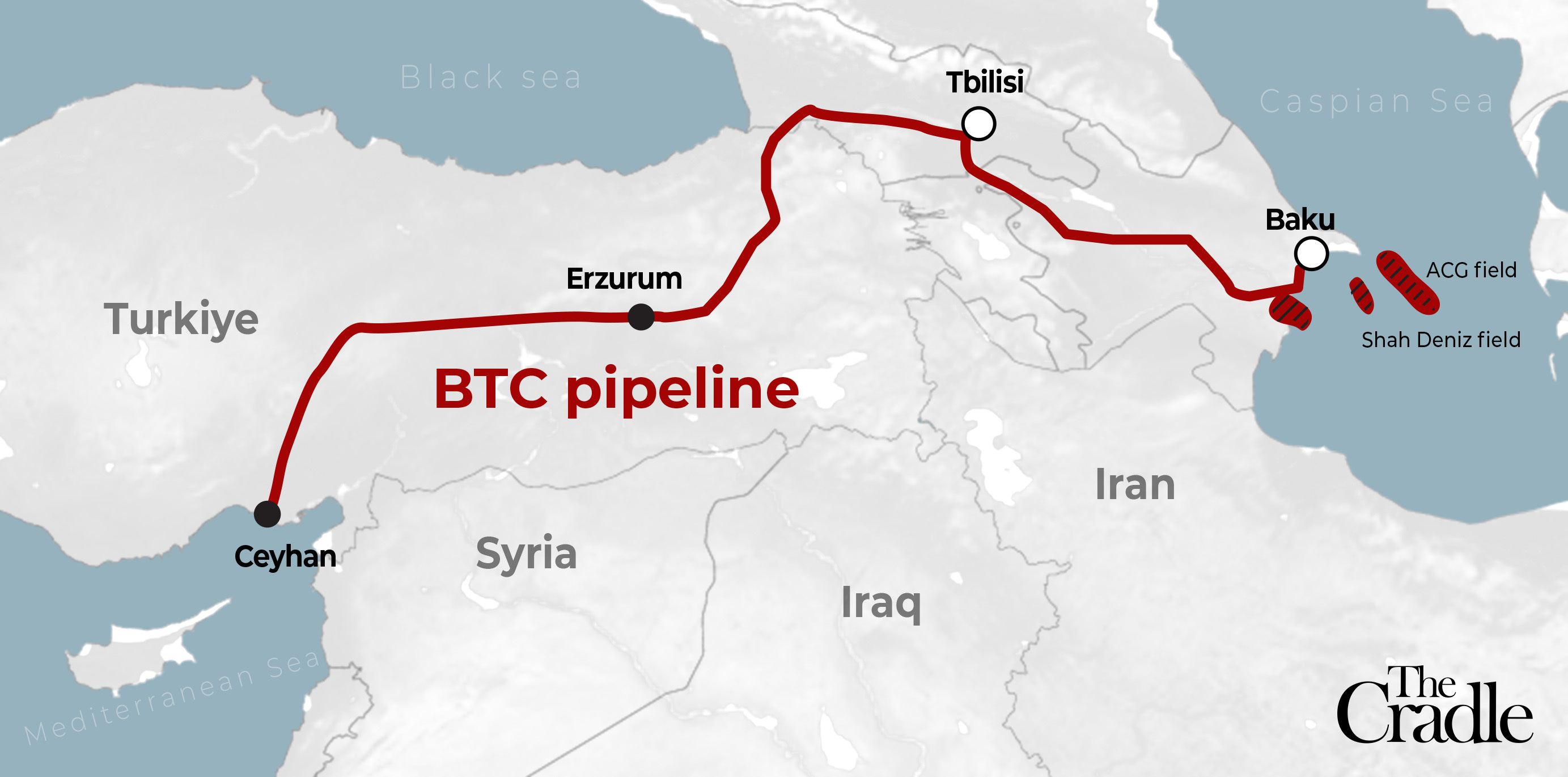
The Caspian Sea, ringed by Azerbaijan, Kazakhstan, Turkmenistan, Russia, and Iran, sits on enormous oil and gas reserves. During Soviet rule, every drop of that oil moved through Russian pipelines, because there was no alternative. Independence changed that math. In September 1994, Azerbaijan signed the so-called “Contract of the Century,” a $7.5 billion deal to develop its offshore oil fields and that deal made the question of how to get the oil out suddenly urgent and internationally contested. Russia wanted the new pipeline routed through its own territory. Türkiye, with U.S. backing, pushed a different plan entirely: a pipeline that would run from Baku in Azerbaijan, through Tbilisi in Georgia, and terminate at Ceyhan on Türkiye’s Mediterranean coast, bypassing Russia completely.
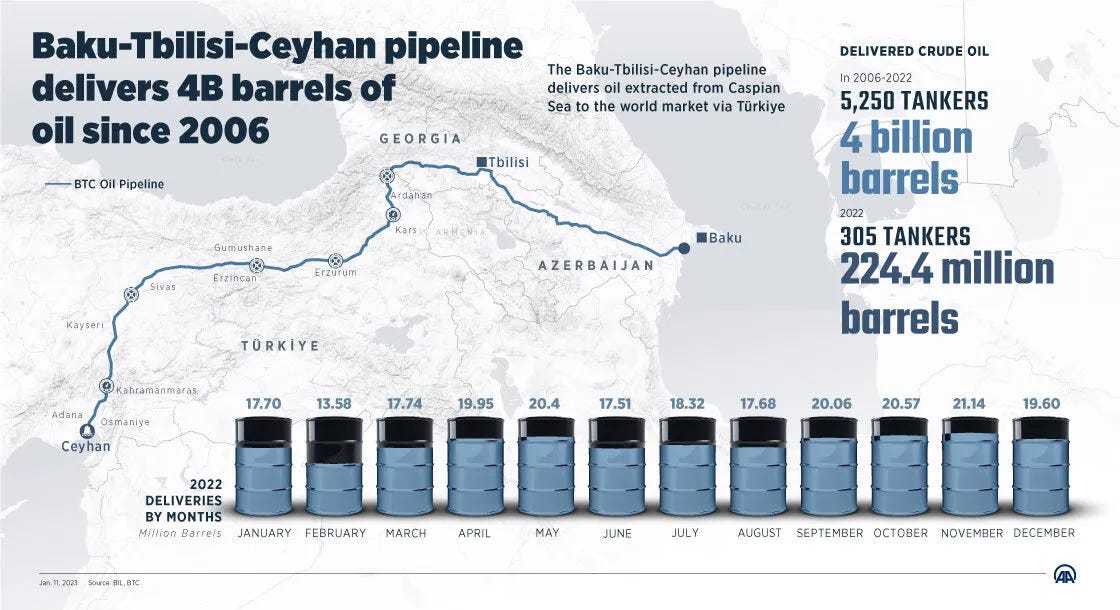
Construction ran from 2003 to 2005, and the first oil reached Ceyhan on May 28, 2006. The Baku-Tbilisi-Ceyhan pipeline stretches 1,768 kilometers, more than 1,000 of them inside Türkiye, and moves roughly a million barrels a day at capacity. It has shipped more than four billion barrels since opening. Türkiye collects an estimated $200–290 million a year in transit fees, and just as valuable, the pipeline diverted an enormous volume of tanker traffic away from the increasingly congested Bosphorus Strait, which runs directly through Istanbul.
Money followed the flag
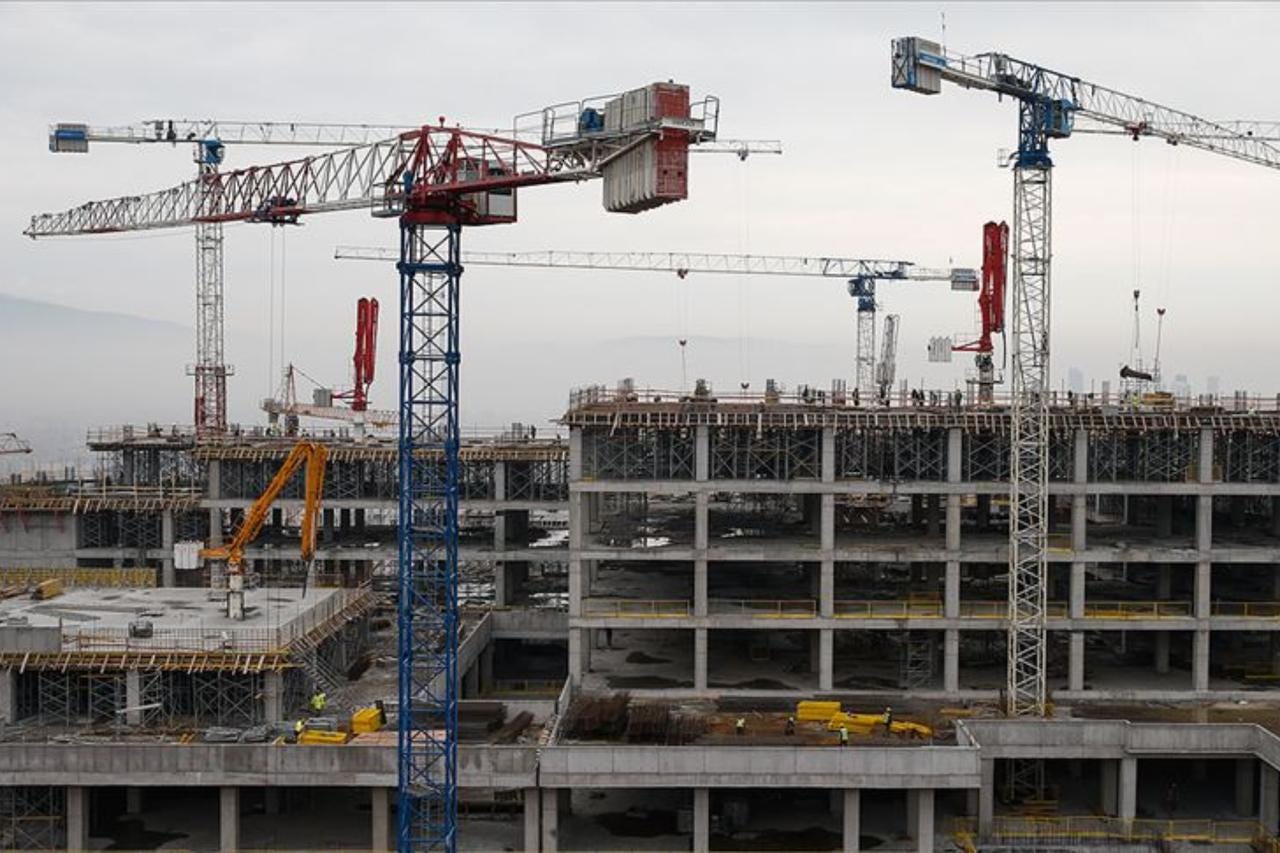
Energy transit was the headline, but the deeper economic story is construction and trade. Turkish contractors who had already built a reputation across the Middle East and North Africa, poured into the former Soviet space as soon as it opened. Turkish firms have completed an estimated $50.9 billion worth of construction projects in Turkmenistan alone since independence, and Turkish construction companies’ cumulative work in Russia has approached $100 billion. Nearly 4,000 Turkish businesses now operate across Central Asia; in Uzbekistan alone, roughly 1,900 Turkish companies are active, trailing only China and Russia in market presence. Türkiye has ranked among Kyrgyzstan’s top three sources of foreign direct investment continuously since 2008.
More recently, the Organization of Turkic States has tried to formalize this financial relationship: it launched a Turkic Investment Fund in May 2024, initially capitalized at $500 million and since expanded to $600 million, alongside the “Middle Corridor” transport initiative, a trade route running from China through Central Asia, across the Caspian, through the Caucasus and Türkiye, into Europe, explicitly designed as an alternative to routes running through Russia. That project has taken on new urgency since 2022, as sanctions on Russia have pushed Central Asian and European trade to look for paths around Russian territory rather than through it and every one of those alternative paths runs through Türkiye.

A complicated neighbor, not a simple win
What Türkiye actually built, in other words, isn’t dominance. It’s optionality a set of cultural, energy, and trade relationships that didn’t exist for seventy years and that give modern Türkiye leverage, revenue, and diplomatic reach it simply could not have had while the USSR stood.
The bigger picture
Zoom out, and the USSR’s collapse is one of the clearest cases of a geopolitical earthquake reshaping a neighboring middle power’s entire strategic identity. Cold War Türkiye was a defensive garrison state on NATO’s edge, valued mainly for the Bosphorus and for hosting American bases aimed at Moscow. Post-Soviet Türkiye is something else: an energy transit hub collecting rent on Caspian oil, the cultural anchor of an emerging Turkic political bloc stretching to the Chinese border, a top-three foreign investor across several Central Asian economies, and a country that gets courted by Washington, Moscow, and Beijing simultaneously because its geography now matters to all three.
None of that was inevitable. It took thirty-plus years of patient, sometimes clumsy, sometimes very well-timed diplomacy, recognizing new states within days, building universities and TV networks, backing the right pipeline at the right moment, and showing up with construction crews when other countries were still debating strategy. But the underlying opportunity, an empire collapsing right on its doorstep and leaving behind nations that spoke its language is one most countries never get. Türkiye got it once, in 1991, and is still cashing it in.
Sources
• Why Washington should pay attention to Turkey’s presence in Central Asia — Atlantic Council
• Turkey’s Growing Influence in Central Asia — The Diplomat
• Turkey’s Comeback to Central Asia — Insight Turkey
• Turkey’s Turns to Central Asia: Learning by Doing — Stiftung Wissenschaft und Politik (SWP)
• Turkey’s policy in Central Asia — New Eastern Europe
• Pipeline Dreams in the Caucasus — Belfer Center for Science and International Affairs
• Baku–Tbilisi–Ceyhan pipeline — Wikipedia
• Baku-Tbilisi-Ceyhan pipeline delivers over 4B barrels of oil since 2006 — Anadolu Agency
• Baku-Tbilisi-Ceyhan pipeline fact sheet — European Commission
• Turkish contractors have fulfilled $50.9 billion worth of construction projects in Turkmenistan — News Central Asia
• Turkish construction companies implemented almost $100B worth of projects in Russia over 50 years — Azerbaycan24
• Organization of the Black Sea Economic Cooperation — Wikipedia
• The Economics of Turkey-Russia Relations — Soli Özel, EDAM