


Ankara has a map it likes to show off. It stretches from the Bosphorus to the Altai mountains, threading through Baku, Ashgabat, Tashkent, Bishkek, and Astana, captioned with some version of “one nation, many states.” Two decades ago that map would have read as nostalgia, a relic of early-twentieth-century Pan-Turkist pamphleteering pulled out at conferences nobody important attended. Today it is closer to a working blueprint, backed by institutions, arms sales, satellite television, scholarship pipelines, and a foreign minister who spent 2025 and 2026 shuttling between Damascus, Doha, and Astana with roughly equal urgency.
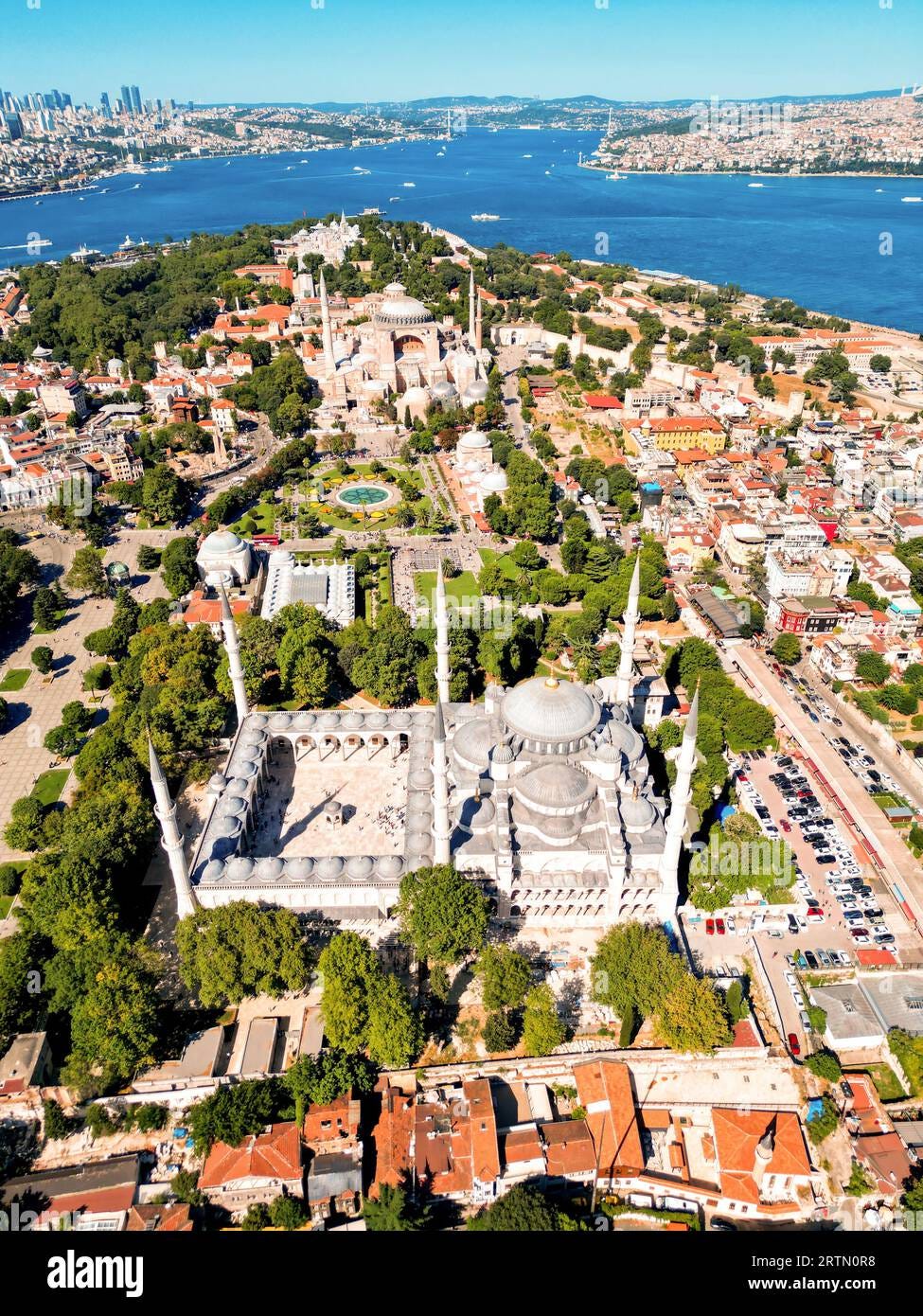
Turkey’s re-entry into Central Asia, and its simultaneous reassertion of power across the Middle East, is one of the more consequential and under-discussed geopolitical stories of this decade. It isn’t a single master plan. It’s a convergence: a religious-cultural “ecumeny” built on shared Turkic and Islamic identity, a defense-export boom led by the Bayraktar drone, a transport-corridor strategy engineered to make Turkey indispensable to Eurasian trade, and a newly assertive posture in Syria and the wider Arab world following the collapse of the Assad regime. Put these pieces together and you understand why Ankara now matters in conversations about both Kazakhstan’s foreign policy and Israel’s northern security calculus two conversations that, until recently, had nothing to do with each other.
From Atatürk’s Inward Turn to Erdoğan’s Outward One
Modern Turkey spent most of the twentieth century deliberately turning its back on the idea of pan-Turkic or pan-Islamic leadership. Mustafa Kemal Atatürk built the republic as a secular, inward-looking nation-state, and Soviet control of Central Asia and the Caucasus made any Turkic solidarity project moot for seventy years. That changed overnight in 1991. The USSR’s collapse produced five newly independent, Turkic-majority states Azerbaijan, Kazakhstan, Kyrgyzstan, Turkmenistan, and Uzbekistan and Ankara, under Turgut Özal, was first through the door with embassies, scholarships, and a state broadcaster beaming Turkish-language programming eastward.
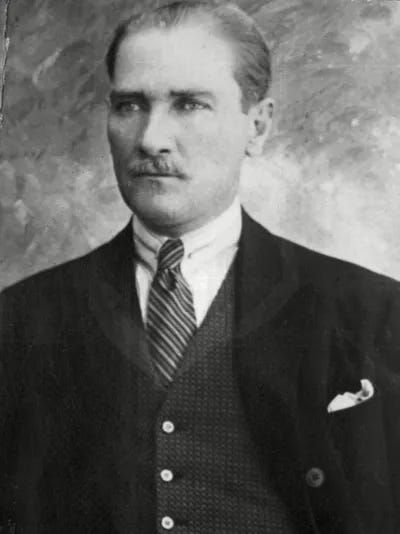
That first wave of enthusiasm mostly fizzled. Turkey in the 1990s was economically fragile, and Central Asian elites, freshly independent, had no interest in trading a Moscow patron for an Ankara one. What’s changed since is durability. Erdoğan’s Turkey is economically larger, militarily sharper, and far more comfortable running hard and soft power on the same track than the Turkey of Özal or even early Erdoğan. The result is a slow-built architecture of influence that has matured almost quietly over the past decade and is no longer being ignored.
The Institutional Skeleton: OTS and the “Turkic World Vision 2040”
The centerpiece is the Organization of Turkic States (OTS), successor to the looser Turkic Council, grouping Turkey, Azerbaijan, Kazakhstan, Kyrgyzstan, and Uzbekistan as full members, with Turkmenistan and Hungary as observers. What matters isn’t that it exists, it’s what it’s started doing. The bloc has adopted a formal long-term roadmap, the “Turkic World Vision 2040,” laying out economic integration, a joint investment fund, coordinated transport infrastructure, and even talk of a common alphabet and standardized Turkic-language education, a symbolically loaded project, since script reform has historically been a tool for both drawing closer to and pulling away from Moscow.
A room full of Central Asian and Caucasus leaders, taking notes on the Levant.
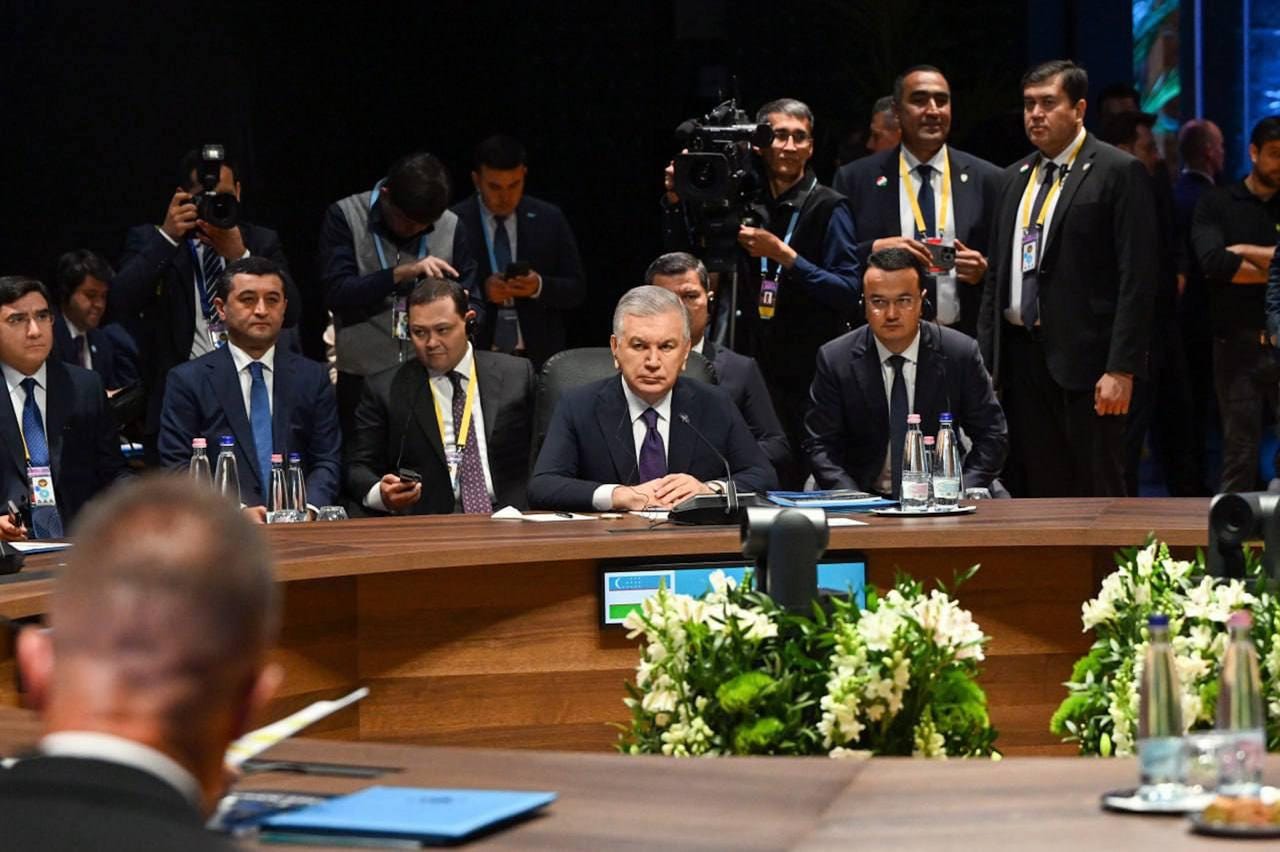
The OTS has also become a stage for increasingly bold rhetoric. At the Budapest summit, and again at the 2025 Qabala summit in Azerbaijan, Erdoğan urged member states to “think beyond our borders,” framing the Turkic world as a bloc with interests well outside Central Asia explicitly invoking Lebanon, Syria, and opposition to what he called Israeli “expansionism.” A summit of Central Asian and Caucasus states being used to stake out positions on the Levant is itself telling: Ankara increasingly treats “Turkic” and “Middle Eastern” foreign policy as one continuous theater, not two separate portfolios.
Beneath the OTS sits a thicker layer of soft-power plumbing, decades in the building and now paying off: TİKA, which funds development projects and restores Ottoman-era heritage sites across the region; the Yunus Emre Institutes, Turkey’s answer to the British Council; TÜRKSOY, promoting a shared Turkic artistic canon; and a growing web of Turkish-run schools and universities that have, in several Central Asian states, quietly replaced the Gülen-movement schools Ankara spent years pressuring host governments to shut down after the 2016 coup attempt.
Hard Power Follows Soft Power: The Drone Decade
If the 2000s were cultural affinity, the 2020s are hardware. Turkey’s defense industry led by Baykar’s Bayraktar TB2 and Akıncı drones has become one of Ankara’s most effective instruments of regional influence, and Central Asia has been an eager customer. Kazakhstan, Kyrgyzstan, Turkmenistan, and Uzbekistan have all signed drone deals or deepened military-technical cooperation with Turkey in recent years, and Kazakhstan in particular has framed its purchases around border security and regional deterrence rather than any single adversary.
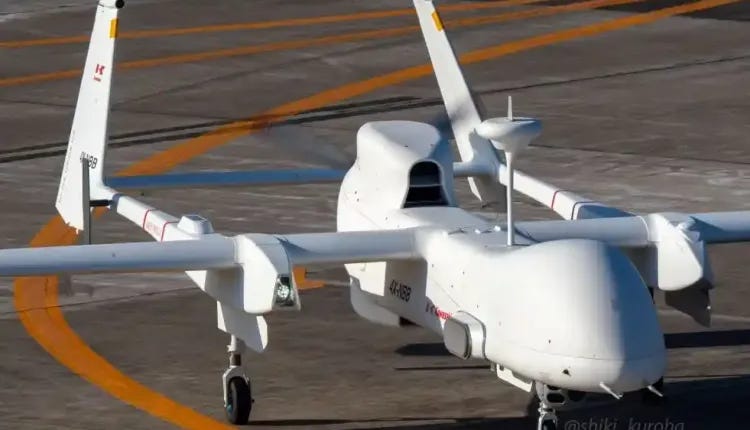
This matters for a reason bigger than arms revenue. Central Asian militaries were, for three decades, almost entirely dependent on Russian equipment, training, and doctrine. Every drone contract signed with Baykar is a small but real diversification away from that dependency arriving right as Russia’s war in Ukraine has both distracted the Kremlin from its “near abroad” and dented confidence in Russian military hardware as the regional gold standard. Turkey has been the most visible beneficiary of that opening: a supplier that is Muslim-majority, non-Western, non-Chinese, and culturally legible to the buyers.
Azerbaijan is the model case Ankara likes to point to. Turkish drones, doctrine, and diplomatic cover were central to Baku’s 2020 and 2023 victories over Armenia in and around Nagorno-Karabakh, and the Turkish-Azerbaijani relationship long billed by both governments as “one nation, two states” is the template Ankara wants to extend eastward across the Caspian.
The Corridor Play: Geoeconomics as Geopolitics
Underneath all of it is infrastructure. The Middle Corridor formally the Trans-Caspian International Transport Route runs from China through Kazakhstan, across the Caspian Sea, through Azerbaijan and Georgia, into Turkey and onward to Europe, deliberately routing around both Russia and Iran. For Turkey, the corridor is grand strategy in miniature: it makes Ankara a physically indispensable node in Eurasian trade, gives Central Asian states an alternative to total dependence on Russian and Chinese routes, and builds the kind of interdependence that soft-power institutes alone can’t manufacture.
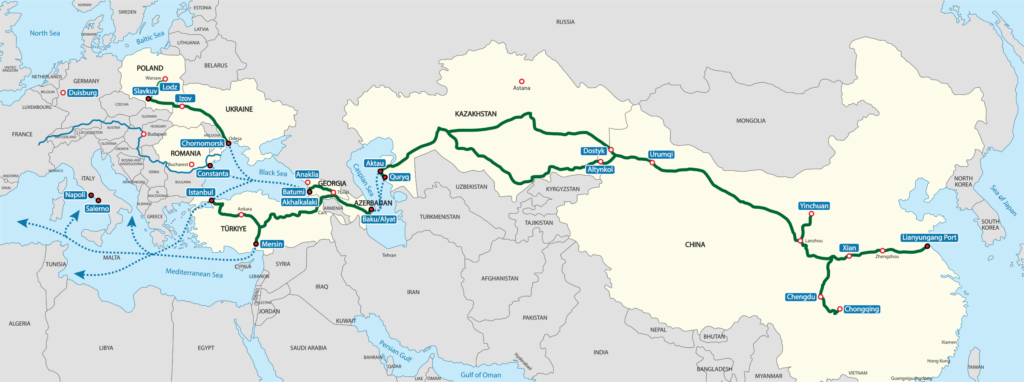
The corridor also puts Turkey in a three-way relationship with the two powers that have historically dominated Central Asia. Russia, weakened and distracted by Ukraine, has less capacity to police the “near abroad” it once treated as exclusive turf. China flush with capital and increasingly using the Middle Corridor itself to hedge against instability in Russia and Pakistan is simultaneously Turkey’s largest infrastructure competitor in the region and a partner Ankara needs for corridor financing. Turkey’s answer has been careful multi-alignment: deepen ties with Central Asian capitals without picking a fight with Moscow or Beijing, extract economic and military openings where possible, and let the OTS do the slow work of consolidation. Central Asian governments have their own reasons to welcome a third option, Kazakhstan, Uzbekistan, and the others have spent years avoiding an exclusive Russian or Chinese orbit, and a resurgent Turkey offers a hedge that costs them relatively little in sovereignty.
Turning West Again: Syria, Israel, and the Gulf
The same period that saw Turkey deepen its Central Asian footprint also saw it become the single most consequential outside power in a rebuilt Syria. The fall of Bashar al-Assad’s regime in December 2024 removed Turkey’s most durable regional adversary and installed a government under Ahmed al-Sharaa that owes much of its military and political viability to Turkish backing training, intelligence support, and now defense pacts and reconstruction contracts that put Turkish companies and Turkish leverage at the center of Syria’s rebuilding. Analysts have taken to describing Ankara’s approach with a blunt shorthand: topple, tame, trade.
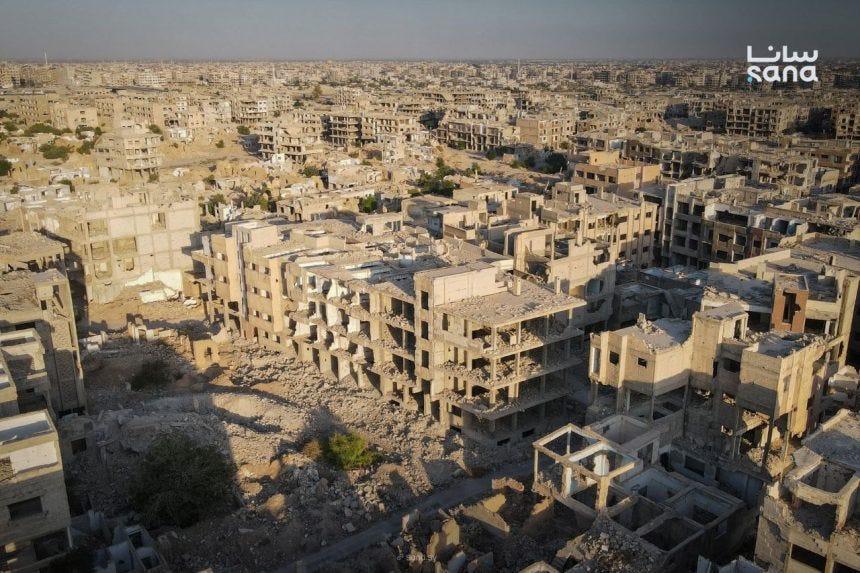
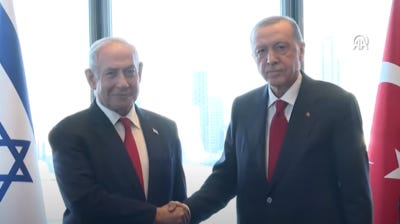
That new centrality has put Turkey on a collision course with Israel. Both states now operate extensively inside Syrian territory, both claim to be acting against extremist threats, and both eye the other’s ambitions in the vacuum Assad left behind producing what several analysts have started calling an emerging cold war, playing out through overflights, proxy positioning, and increasingly blunt talk of “red lines” on both sides. Erdoğan has folded this rivalry into his broader messaging to the Turkic and Islamic world, casting Turkey as the chief check on Israeli expansion in the Levant which conveniently rallies domestic and regional Islamist-leaning constituencies while reinforcing Ankara’s claim to Middle Eastern leadership.
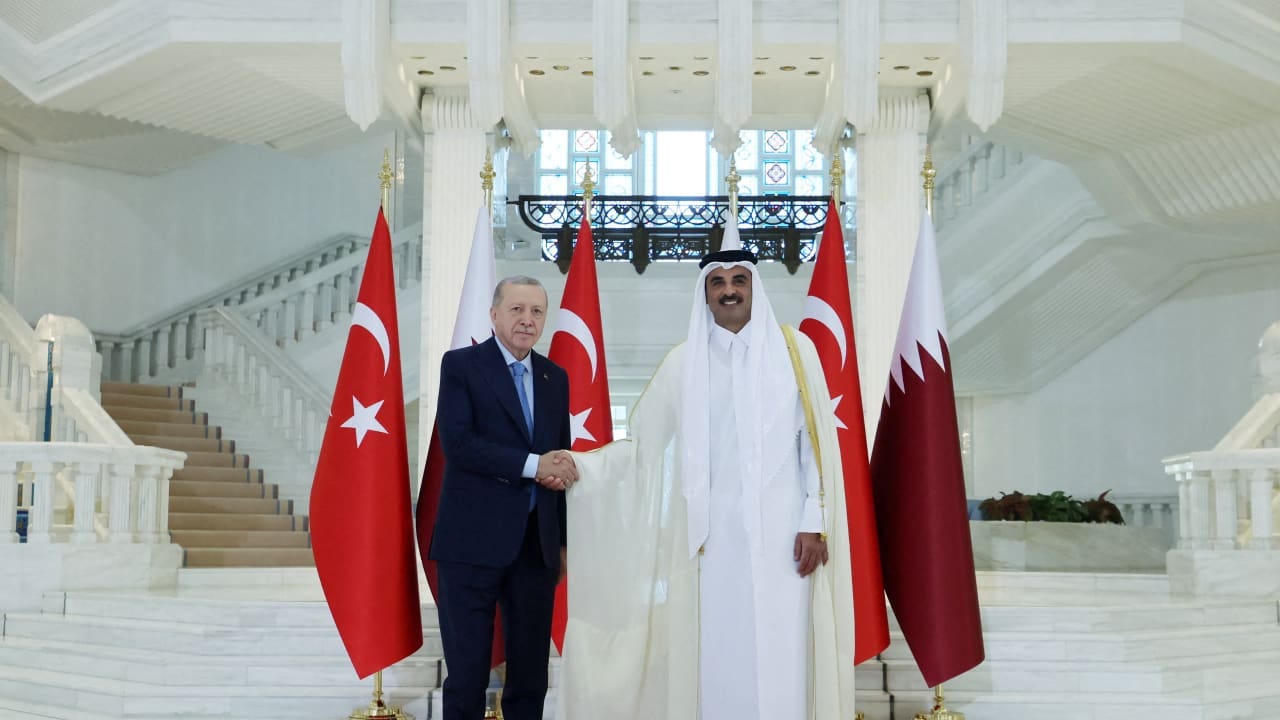
Turkey’s Gulf relationships complete the picture. Years of estrangement with Saudi Arabia, the UAE, and Egypt over Ankara’s support for the Muslim Brotherhood have given way to a more transactional détente, even as the underlying ideological rivalry hasn’t disappeared. Qatar remains Turkey’s closest Gulf partner, and the two capitals continue to be viewed particularly by Emirati, Saudi, and Israeli officials as the twin patrons of political Islam in the region, a framing Ankara mostly doesn’t bother denying.
.
Ecumeny as Strategy
What ties Central Asia and the Middle East together in Turkish strategic thinking is the idea of ecumeny a sphere held together not by hard borders or formal empire but by shared religion, language, historical memory, and now, increasingly, economic and security dependency. It’s a deliberately elastic concept, and the elasticity is the point: it lets Ankara address Central Asian audiences in the language of Turkic kinship, Arab and broader Muslim audiences in the language of Islamic solidarity and anti-Israeli resistance, and Western audiences in the language of a reliable NATO member offering an alternative to Russian and Chinese influence sometimes within the same week.
This is neo-Ottomanism updated for a multipolar world, and Erdoğan’s government has been candid enough about the ambition that nobody needs to read between the lines anymore. The strategy borrows the Ottoman Empire’s old trick of ruling through a layered network of loyalties rather than direct annexation, but runs it with twenty-first-century tools: drone sales instead of janissary garrisons, satellite broadcasting instead of court patronage, development banks instead of tax farming.
The Limits Nobody Should Ignore
None of this is a story of unstoppable Turkish ascent. Central Asian governments have been notably careful not to become instruments of any single outside power, Turkey included, hedging Ankara’s overtures against continuing, substantial relationships with Moscow and Beijing, Kazakhstan and Uzbekistan in particular have pointedly resisted OTS language that reads as more than symbolic. Turkey’s own economy, still recovering from years of currency crisis and inflation, limits how much capital Ankara can actually deploy compared to Chinese infrastructure financing. And Turkey’s Syria policy, however successful in the near term, carries real risk: a Turkish-Israeli confrontation, a Kurdish backlash, or an implosion of the fragile al-Sharaa government could unwind two years of gains in a matter of months.
Still, the trajectory is unmistakable. A country that spent most of the last century defining itself by what it was not, not the Ottoman Empire, not a Middle Eastern power, not a patron to the Turkic diaspora has spent the last two decades quietly building the institutions, arms industry, and rhetorical architecture to be all three at once. Whether that adds up to a durable sphere of influence or an overextended, multi-front hedge depends largely on variables outside Ankara’s control: the war in Ukraine, the durability of Syria’s new government, and how much longer Russia and China tolerate a junior partner acting like a peer.
For now, the map with Ankara at the center and lines running to Astana, Baku, Bishkek, Tashkent, and Damascus is not a fantasy. It’s a working draft of Turkish foreign policy and one worth watching closely as it fills in.
Sources and further reading:
• Organization of Turkic States Expands Turkish Influence Across Central Asia
• Organization of Turkic States: An Instrument of Turkey’s Central Asia Policy — VIF India
• Why the US Must Include the Organization of Turkic States in Its Central Asia Policy — Hudson Institute
• Limits of Türkiye’s Rising Influence in Central Asia — ORF
• Turkey’s Third Vector: How the Turkic States Are Expanding Central Asia’s Room for Maneuver — Times of Central Asia
• Kazakhstan’s Drone Deal with Turkey Showcases Regional Security Focus — Caspian Policy Center
• Dawn of the Drone Age in Central Asia — The Diplomat
• 10 Things to Know About Turkey’s Interventions and Influence in Syria — FDD
• Turkey’s Rising Influence in Post-Assad Syria — FDD
• Topple, Tame, Trade: How Turkey Is Rewriting Syria’s Future — ECFR
• Turkey’s Search for a Middle East Order — Brookings
• At Summit of Organization of Turkic States (OTS) in Budapest, Erdoğan Urges Member States to Stand Against Israel’s Expansionism — MEMRI
• The Organisation of Turkic States Summit in Qabala — SpecialEurasia
• Israeli-Turkish Competition Intensifies in Syria and Beyond — Middle East Council on Global Affairs
• Israel and Turkey’s Emerging Cold War in the Mediterranean — Manara Magazine
• Turkey-Israel Rivalry in the New Syria — Stimson Center
• The Middle Corridor Through Central Asia: Trade and Influence Ambitions — FPRI
• Why the Middle Corridor Matters Amid a Geopolitical Resorting — Atlantic Council
• China’s Middle Corridor Push Puts Europe in the Slow Lane — Asia Times
• Turkic World Vision 2040 — Organization of Turkic States
• The Evolution of Pan-Turkism and Turanism — Caspian Post
• Qatar, Turkey, and the Rebuilding of the Muslim Brotherhood — Aspenia Online
• Turkey’s Relations with Gulf States: Temporary Shift or Permanent Alignment? — Middle East Policy